Call Book Now
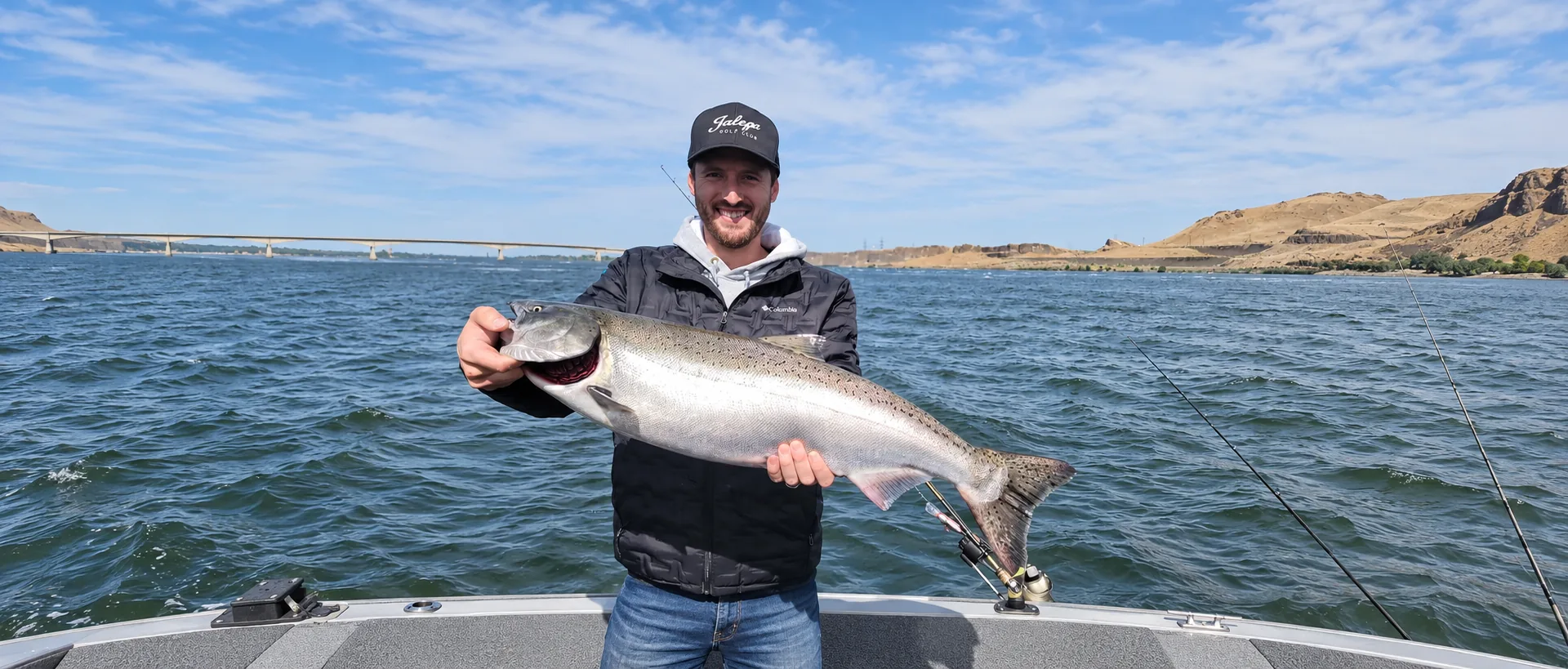
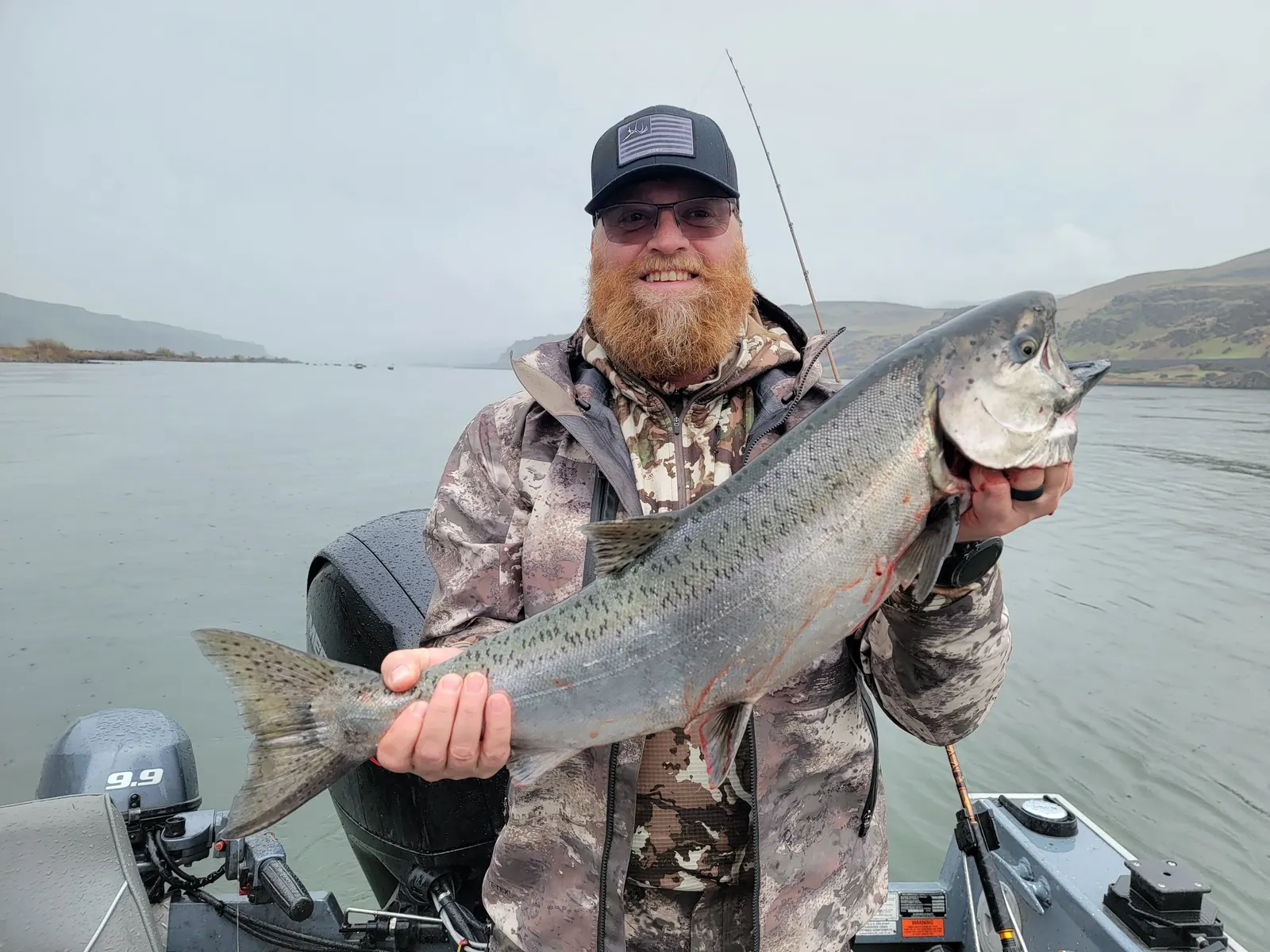
Angler in a black cap holding a bright silver Chinook salmon on the Columbia River

Oregon · Washington · Spring, summer and fall Chinook

Columbia River Salmon Fishing Guide

Columbia River salmon fishing for big Chinook, from the spring run through fall, from a fully enclosed, heated boat.

Average Chinook
About 22 lb
The largest salmon in the river
Big fish
40 lb and up
Summer June hogs and fall kings
Three runs
Spring to fall
Spring, summer and fall Chinook
Trips
Half or full day
Rods and tackle provided
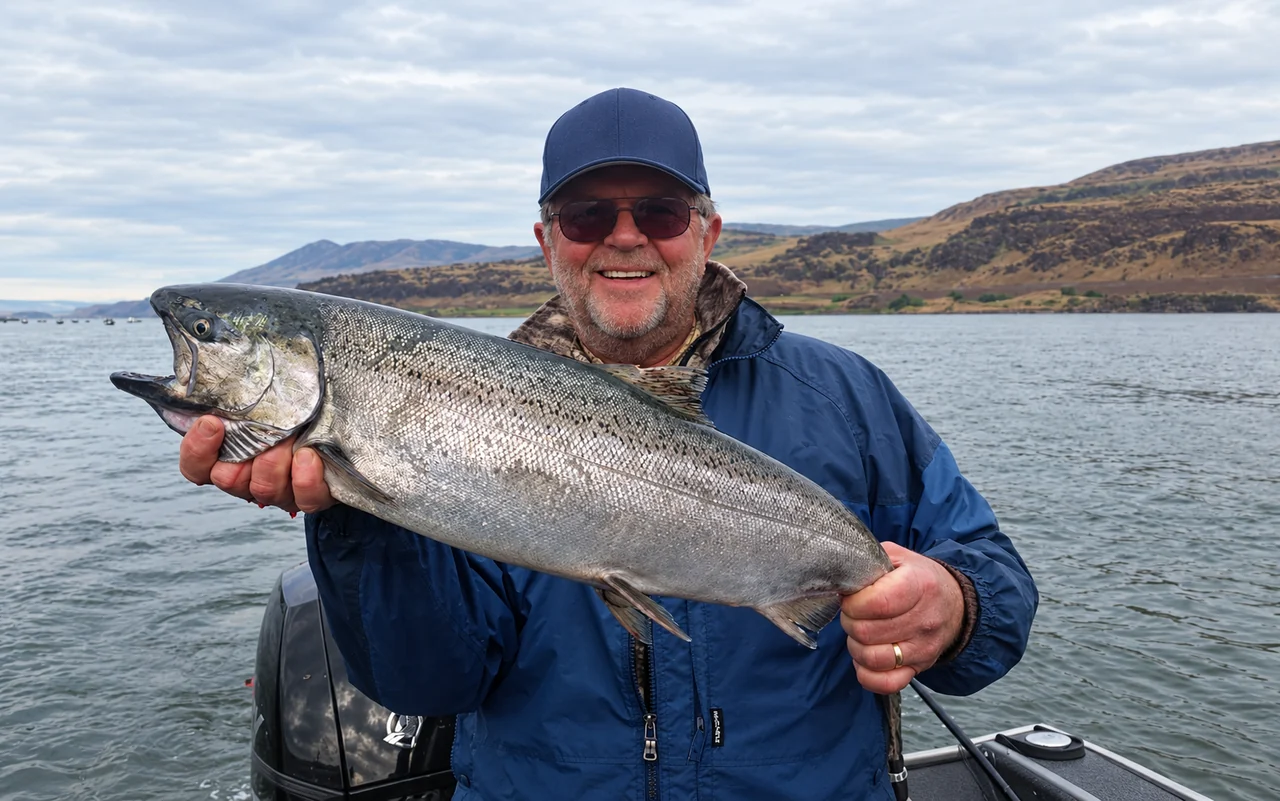
Angler in a blue jacket holding a big Chinook salmon on the Columbia River, brown hills behind

The fishery

Millions of salmon, one river

Millions of salmon come back to the Columbia every year, which gives anglers a run to fish for through much of the year.

Chinook, also called kings, are the largest salmon in the river and average about 22 pounds. They are fish people talk about for a long time.

Follow the run upstream

  1. Astoria The fall run starts here in August
  2. Longview Spring fishing starts in the narrows
  3. Bonneville Strong spring fishing at the dams
  4. The Dalles Strong spring fishing at the dams
  5. John Day Strong spring fishing at the dams
  6. McNary Strong spring fishing at the dams
  7. Snake River Most spring fish turn up the Snake
  8. Hanford Reach Where most fall Chinook spawn

When a season closes in one stretch, guides move upstream and keep fishing ahead of the fish.

When to fish

Three Chinook runs, one long season

Spring, summer and fall each have their own window. The bars show them by name, and what else is running beside them.

October: Salmon is in season, alongside Walleye, Sturgeon (fall–winter), Steelhead (fall–winter).

Typical fishing months for each species, from our season calendar
Species Window Typical months Fishing now
Walleye Year-round All year Yes
Sturgeon Keeper January to March No
Sturgeon Spring April to May No
Sturgeon Oversize June to August No
Sturgeon Fall–winter September to December Yes
Salmon Spring April to May No
Salmon Summer June to July No
Salmon Fall August to October Yes
Steelhead Winter January to March No
Steelhead Fall–winter September to December Yes
Shad Run June to July No

Windows are typical, not a guarantee. Runs and regulations change every year and are set by ODFW and WDFW, so call us or check their current rules before you book.

Full seasons and runs

The three runs

Spring, summer and fall: three different days

Each run has its own water, its own fish and its own tactics. Pick the one that suits you, and your guide handles the rest.

Bearded angler holding a spring Chinook salmon on the Columbia River

Spring

Spring Chinook

Cold water, fast fish.

In the coolest water of the year the salmon move quickly upriver toward their spawning grounds, and most of them go into the Snake River. Fishing starts near Longview and follows the run upstream.

  • The most regulated run of the year
  • Can close without warning when returns are low
  • We watch the rules and book around them
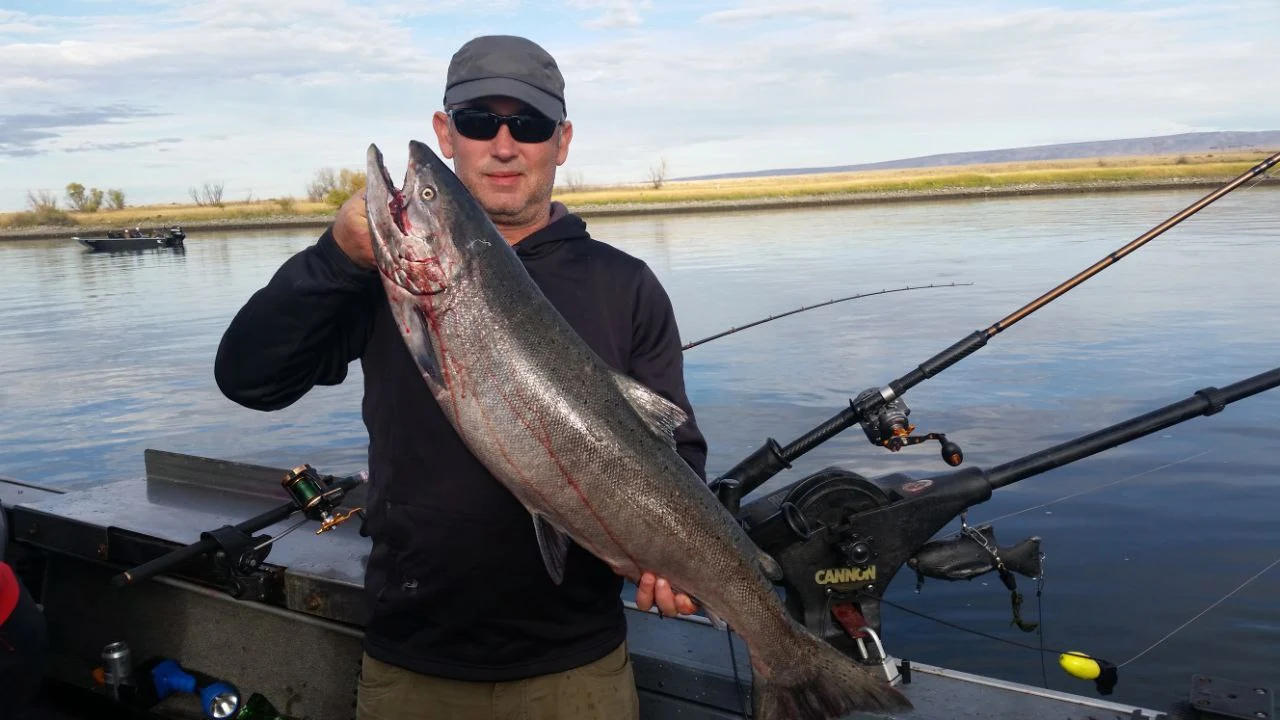
Angler in a black jacket holding a Chinook salmon on the boat, with downrigger rods behind him

Mid June to mid July

Summer Chinook

The June hogs.

Mixed in with the last of the spring fish, these are the June hogs, and many are over 40 pounds. The river warms fast, and once the water passes 60 degrees catch rates drop.

  • Fish 40 pounds and up
  • Set up before sunrise, fish until noon
  • Tackle changes with the flow, big plugs one day and a smaller spin-n-glow the next
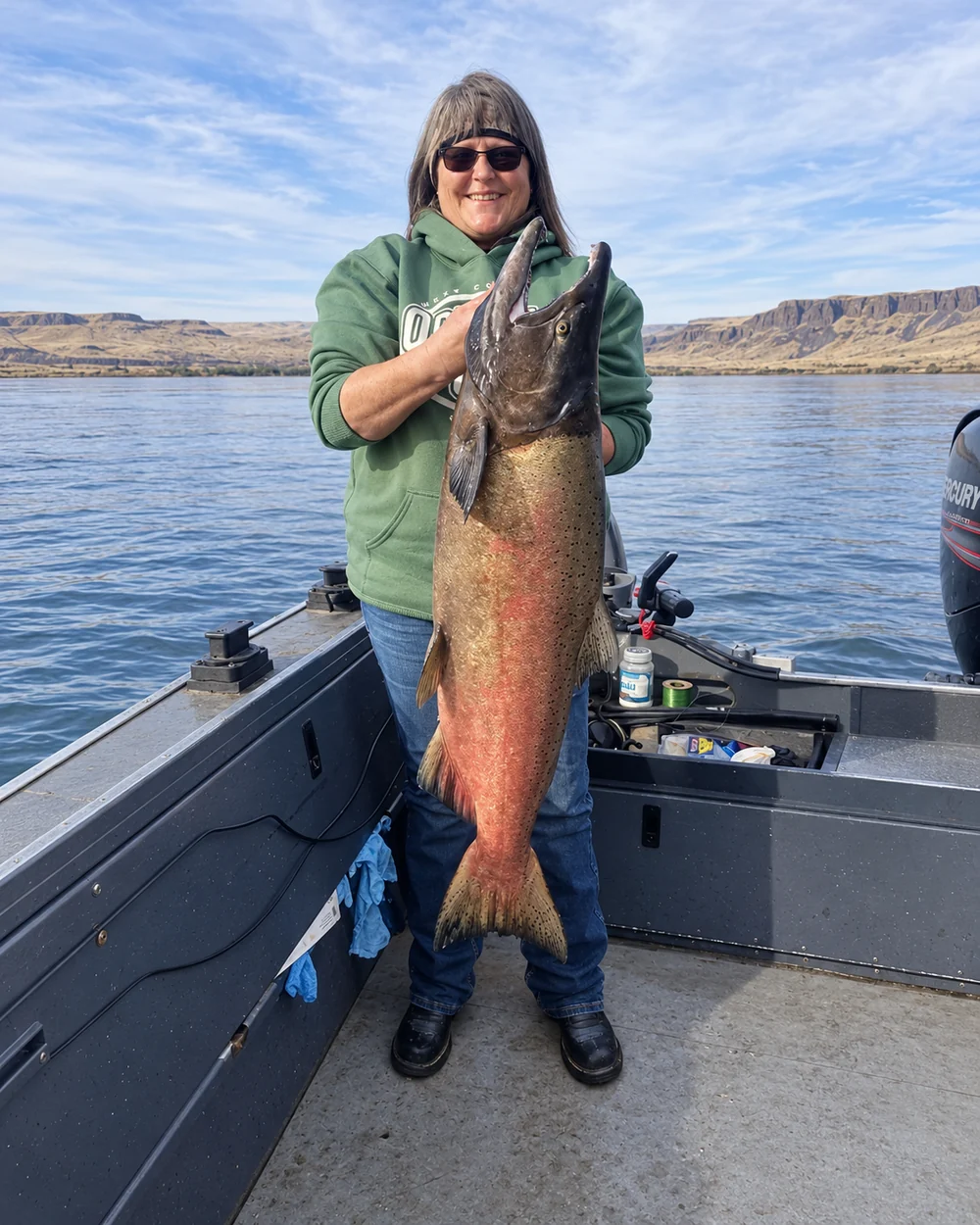
Woman in a green jacket holding a fall Chinook salmon from the Hanford Reach

August to October

Fall Chinook

The prize.

The biggest, hardest-fighting salmon of the year. More than a million fish head upriver, most of them to the Hanford Reach, a free-flowing stretch of about 40 miles near the Tri-Cities where hundreds of thousands lay.

  • The run starts in August near Astoria and moves up in late August
  • Fishing runs into late October
  • Baits and tactics change every 30 miles

What decides the tackle

Experienced anglers change baits and tactics with the river, sometimes from one day to the next. On our boats your guide does that for you.

  • Water flow
  • Water temperature
  • Time of day

Trips and rates

Fish salmon with us

Three ways to spend a day on the water. Rods and tackle are included on every trip.

  • Full day

    Salmon or walleye

    A full day on the water after salmon or walleye. Rods and tackle included.

    Length
    8 hours

    $225 per person

    Best for
    Making a day of it on one fish.
  • Combo trip

    Two species in one day

    Two kinds of fish in one day, so you cover more water. Rods and tackle included.

    Length
    8 hours

    $250 per person

    Best for
    Trying two kinds of fish in one day.
  • Half day

    Walleye, sturgeon or salmon

    A shorter outing on the river. Rods and tackle included.

    Length
    4 to 5 hours

    $500 for the whole boat, up to 4 people

    $200 each for two anglers

    Best for
    A small group, a pair, or a first time on the river.

Salmon catches

Chinook from our boats

Salmon questions

Before you book a salmon trip

Short answers to what people ask us most about salmon.

Still unsure? Call or text (541) 357-6577

When is Columbia River salmon season?

There are three Chinook runs: spring, summer and fall. Spring and summer fish run first, and the big fall run follows from late summer into October. See the seasons and runs. ODFW and WDFW set the dates each year, so call before you book.

How big are Columbia River Chinook?

Chinook, also called kings, are the biggest salmon in the river and average about 22 pounds. Fish of 40 pounds and more are caught, including the summer fish nicknamed June hogs.

Can a salmon season close suddenly?

Yes. Spring Chinook is the most tightly regulated run, and it can close unexpectedly when returns are low or catch rates are high. We watch the rules and book around them, which is why a call before you pick a date is worth it.

Why is summer salmon fishing slower?

As the river warms, catch rates drop, and once the water is over 60 degrees fishing can be slow. Early starts help: the best chance is before sunrise until about noon.

What is the Hanford Reach?

It is the free-flowing stretch of the Columbia near the Tri-Cities where most fall Chinook end up to spawn. Hundreds of thousands of fish gather in about 40 miles of river.

Do you provide the salmon tackle?

Yes. Rods and tackle are provided, and your guide changes baits and tactics with the water flow and temperature. Bring warm clothing, lunch, drinks and your fishing license.

How much does a salmon trip cost?

A full day for salmon or walleye is $225 per person, and a half day is $500 for the whole boat, up to 4 people, or $200 each for two anglers. Rods and tackle are included. See all rates.

Field notes

Columbia River Chinook: the three runs in detail

The longer version, for anglers who like the detail. You do not need any of it to fish with us: the tackle and the know-how are ours.

Columbia River Chinook, the king

Chinook salmon, called kings, are the largest salmon in the Columbia. They average about 22 pounds, and fish of 40 pounds and more are caught from boats and from the bank.

Millions of salmon return to the river each year, which gives anglers the chance to fish for them across many months. They are also excellent eating fish.

Spring Chinook

With the coolest water of the year, spring salmon move fast toward their spawning grounds, and most of them turn up the Snake River. Fishing starts in the narrows near Longview, Washington, and follows the run upstream. It is also very good around Bonneville, The Dalles Dam, John Day Dam and McNary Dam.

Because of the Endangered Species Act this is the most regulated run of the year. State fish and wildlife agencies watch the returns closely, and the season can close unexpectedly when returns are low or catch rates are high. Guides move upstream to stay ahead of closures, and we plan our spring dates around them.

Summer Chinook

Mixed with late spring fish, these are the June hogs, and many are over 40 pounds. The season opens when the state agencies open it, around the middle of June, and runs to the middle of July.

Early in the season the flows are still good, but the river heats up quickly. Once the water is over 60 degrees, catch rates are slow. Experience shows in the tackle: one day a plug like a mag lip, the next a smaller spin-n-glow when the flow drops, and wobblers in still water. Be on the water before the sun is up and fish until noon for the best chance.

Fall Chinook and the Hanford Reach

The fall Chinook is the prized fish of the sport angler: the biggest and hardest-fighting salmon. The Columbia fall runs have flourished, with counts running over a million fish, all headed upstream to the Hanford Reach to find a gravel bar to spawn on.

The fishery starts in August at Astoria, Oregon, and the fish move upstream in late August. Anglers use many baits and techniques, and what works can change every 30 miles with the flows and water temperature. Most of the fish end up in the Hanford Reach, a 40-mile stretch near the Tri-Cities. The run can be fished into late October.

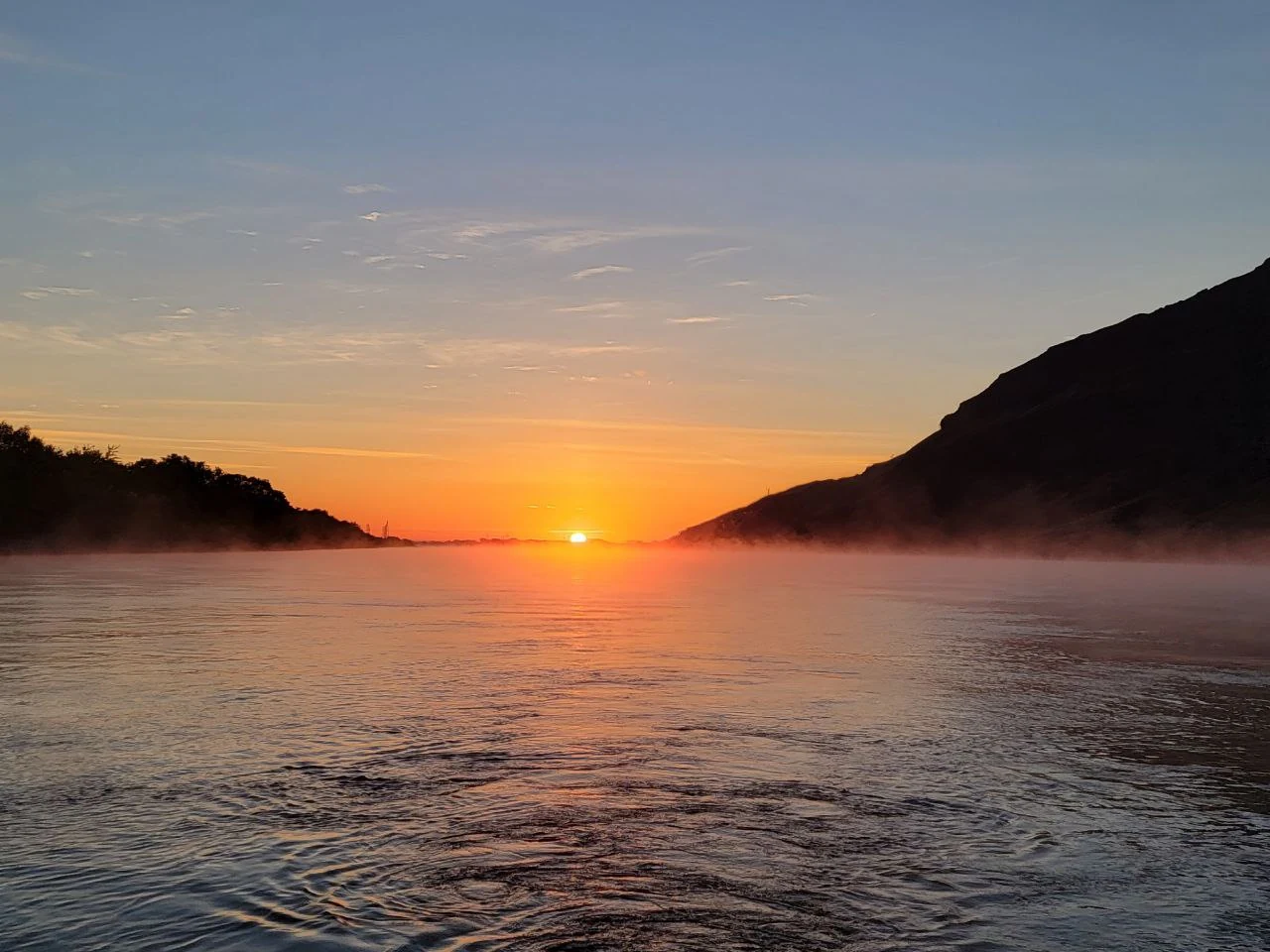
Orange sun rising over the basalt wall of the Columbia River Gorge, glowing on calm water.

Google reviews

Fished with us? Tell Google how your day went.

Questions about your trip? Call or text (541) 357-6577.

Loading the booking form…